
Hi, this is Jay P. Morgan. Today on The Slanted Lens we’re talking about Quality of Light in our next installment of The Laws of Light. If you haven’t, go back to the beginning and learn the basic Laws of Light, before you watch this video.
Quality of Light
Today on The Slanted Lens we’re talking about the quality of light. Light is what creates, defines, and gives us an image. The camera is not our tool- it only records. Light is our tool. We have to learn to create great imagery.
An artist can create simply by making a line. But when a photographer or videographer wants to create a line we need to do that by manipulating the light. If we want a shaded area we need to subtract or add light.
Now we’re at the next step in our lighting journey, and that is the quality of light. What qualities does light have on a human face? We either use the quality of light that’s already available or we create it ourselves. So it’s important that we understand what the quality of light is, what it looks like, and how we can create it.
Hard Source
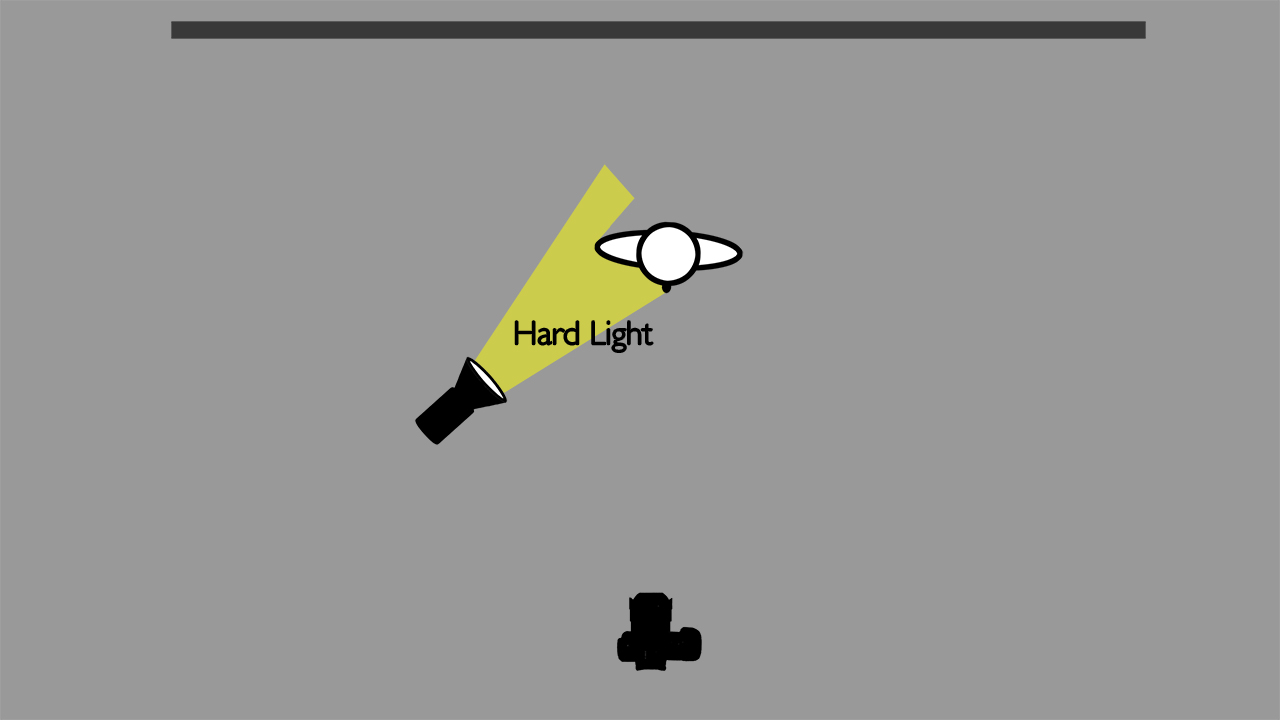
Most of the objects we’ve looked at thus far in the Laws of Light series have been lit with a hard, or pinpoint source of light. The sun is the most common source of pinpoint light. The sun is a very small source of light because it’s so far away. If the sun got closer to us, and therefore bigger, it would become much softer.
You can tell when you have a pinpoint source of light because the shadows are harsh. The transition from light to dark is quick, and goes from highlight to a very deep shadow almost immediately. You can soften a pinpoint source of light by bouncing light back onto your subject, but the source is still hard and the transition still happens very quickly.

Thinking back to our first lesson on a sphere, you remember that we have a shadow side, a highlight side, the core, and the incident highlight. An incident highlight with a hard source of light is much smaller than it is with a softer source. Sometimes people photographed with a hard light will look shiny because that incident highlight is a lot more specular.
Soft Source
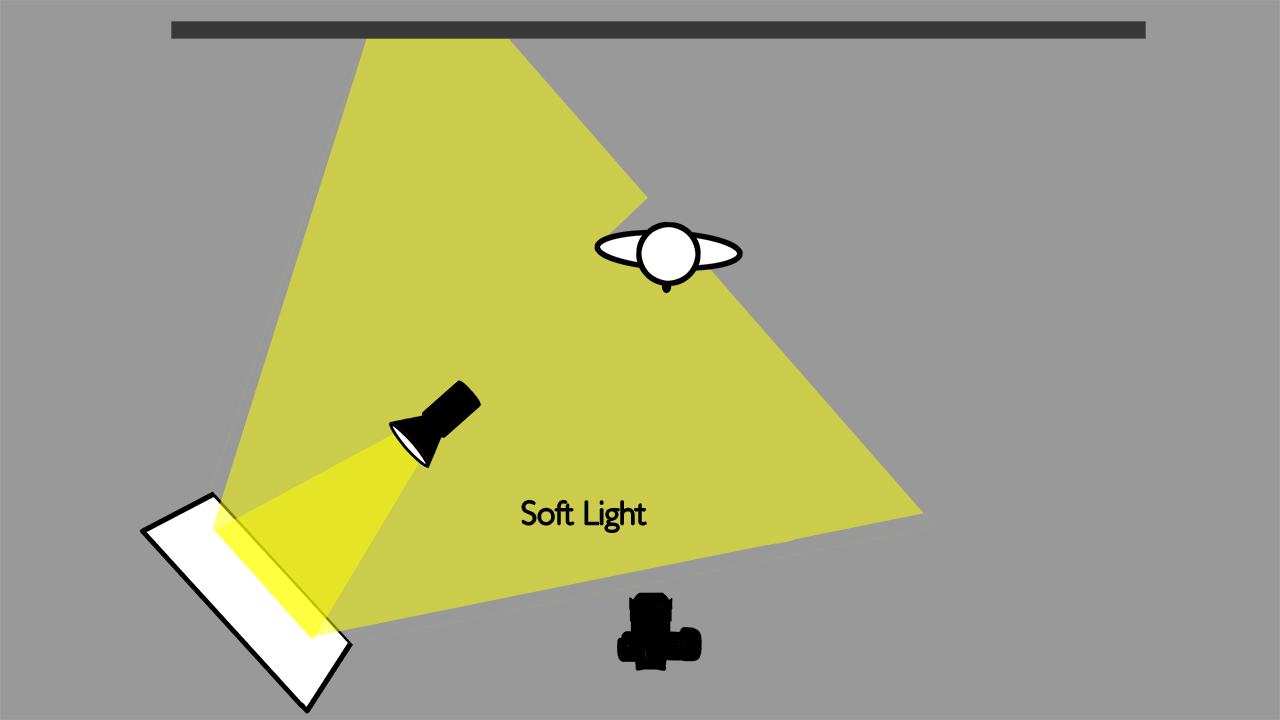
If we turn our light and bounce it off a card onto our model, it changes completely. We still have a shadow and highlight side, but the transition between the two takes longer and is much softer. If the specular highlight is there it’s much softer.

There’s a misconception about light. Even if you have a large source of light, it cannot wrap around your subject. The source has to be able to “see” your subject in order to light it. Having a source of light to bounce a hard light off of and onto your subject will help to soften it and add light to areas it didn’t reach before. But light can’t see around edges. It has to have some help.
Quality of Light and Emotion
The quality of your light also communicates emotion. A hard light is intimidating and strong. A soft light is inclusive and friendly. We’ll talk about that in a later lesson.
Sources of Light
Let’s identify different kinds of quality of light around us. We’ve talked about the sun. The moon is also a pinpoint source of light. If you were to expose correctly for it, it would give you very harsh shadows. Working in the shadows under a tree will diffuse the sun, and give you a soft light. The sun can’t look around the trees. However, if the sun is hitting something very reflecting, it will stay hard, because it’s bouncing off just that one source without any diffusion.
Generally speaking, hard light comes from a direct source, and soft light comes from a diffused source. Most light starts off as a direct source and is softened through reflection or diffusion. Start to look at the quality of light and think about what it can communicate about your subject. Stay tuned for next month’s Laws of Light lesson. Until then keep those cameras rollin’ and keep on clickin’.
-Jay P.
