
(If you want to watch the video review go to The Slanted Lens on YouTube!)
What? An 18-300mm lens for RF Canon, APS-C sensor. Yes, it’s a Tamron 18-300mm lens for Canon. Great all-in-one zoom. 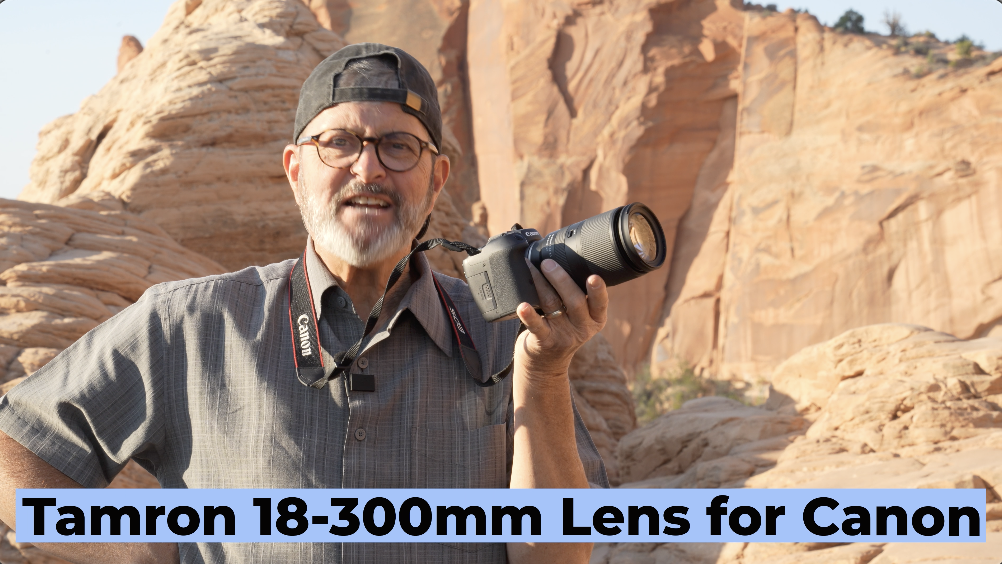 It’s an f/3.5-6.3.
 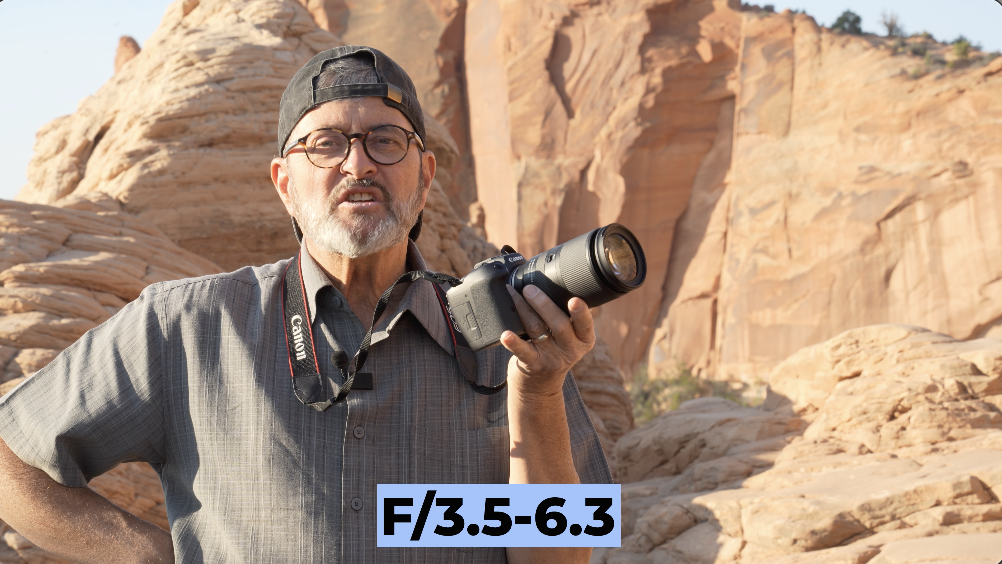 Just a great range that really is the equivalent of a 27-450mm.
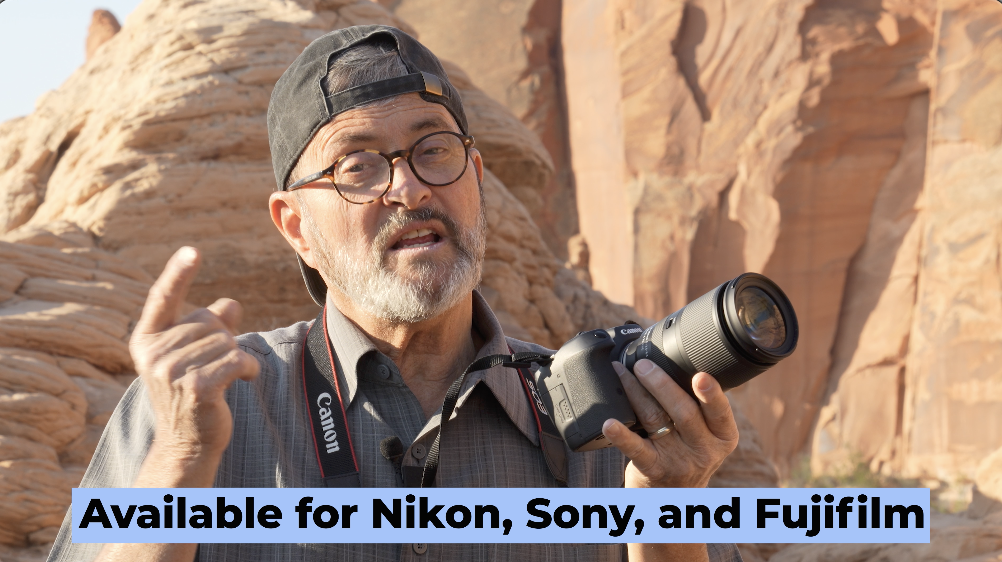
  So, it’s a great range. This is a lens that you carry with you when you want to carry only one lens. And it does it all. And just so you know, you can get this for Nikon, Sony, and Fujifilm.
  So, we’re down here in Moab. We’re going to shoot around all this beautiful red rock. So, let’s just see how this lens does and what an 18-300mm lens looks like. Maybe it’s the lens for you.

So, we came out to Mesa Arch here this morning and I did some photography with this new 18-300mm from Tamron. 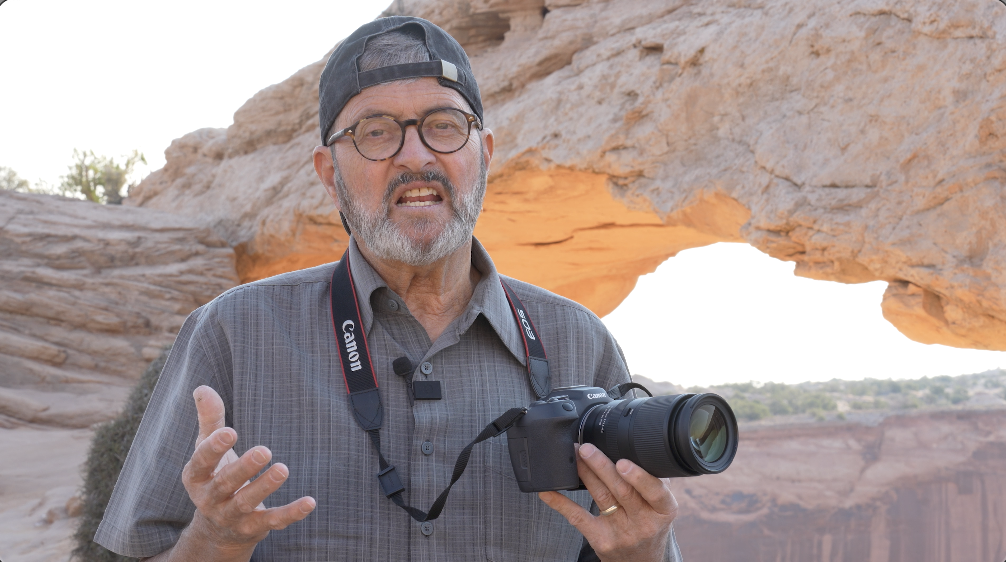 It’s really ideal for wide angle to telephoto to close-up photography. So, I’m right up there under that arch just giving me, at 18mm I’m able to see the arch, to see the sun come up in the background. Got some beautiful images there. So, it worked really nicely.
  I’m wanting to shoot it like f/16. So, I’m shooting at f/16 to get a sunburst coming through that arch. So, I did that and that really worked out well.
 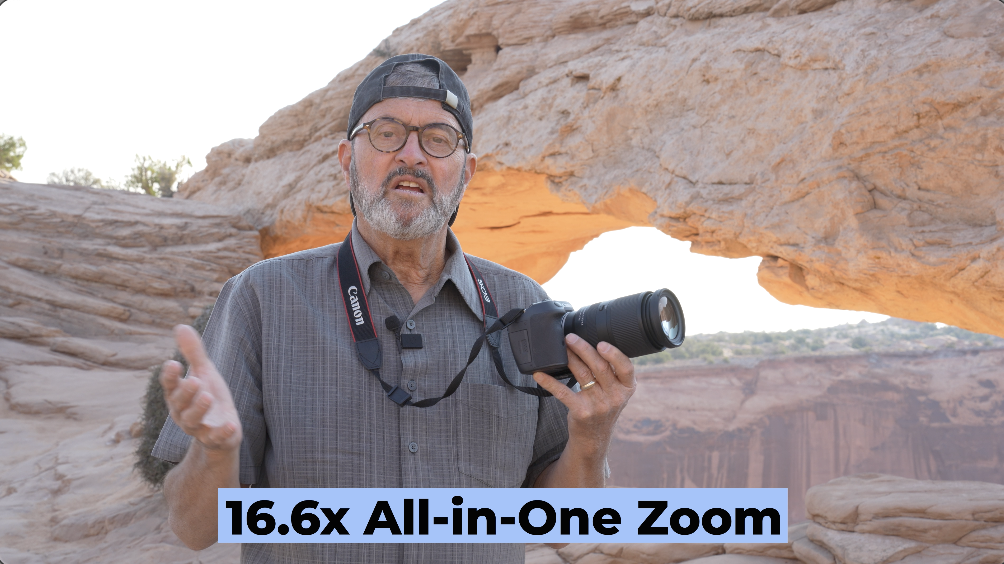 So, what’s interesting about this is it’s a 16.6x all-in-one zoom.
  So, I can get that wide angle shot of the arch, but I also can reach out and get some isolated shots of just the valley down there and the back lit spires looked really cool.
  So, I shot some of those. Let’s take a look at some of the shots from the morning here.

So, it’s a very lightweight, compact lens. It’s like 21.9 oz, which means it’s over a pound, but it’s very compact, very light. We have a 67 mm filter thread on the front, which is fabulous. 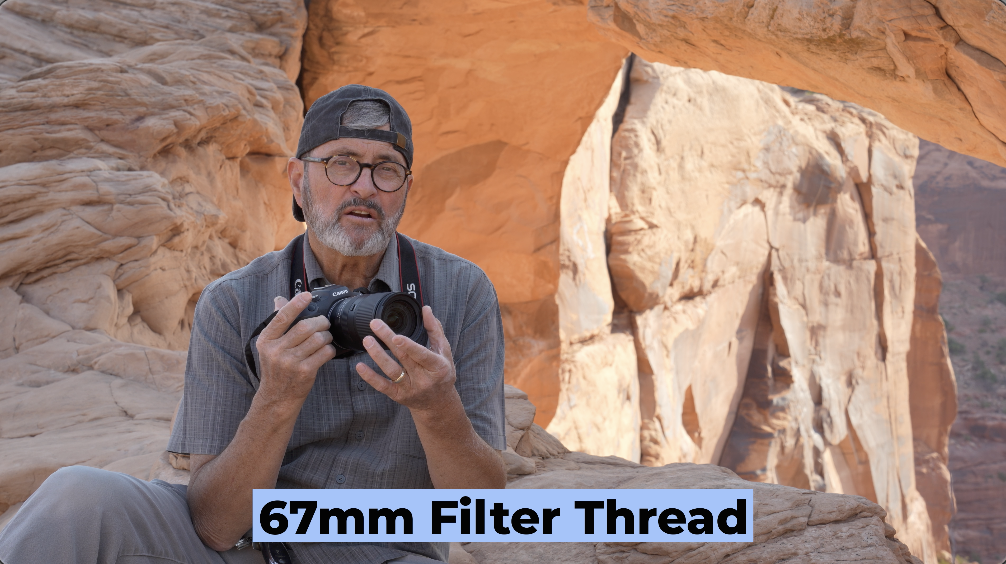 Like most all of Tamron’s lenses in all of their series have been sticking with that 67mm which I’m seeing that now with Panasonic. I’m seeing with a lot of different lens companies that are wanting to make these compact, small lenses, and we have that here.

So, it does have a USB-C port on the side. So you can plug this in and be able to update the firmware and take care of the different programming methods through the Tamron app. It does have autofocus, manual focus on the lens.  And the lens comes with vibration compensation which means we should be able to handhold this pretty nicely at a long, at that 300mm which is 450mm equivalent. Should be able to handhold this. We’ll do a test on that a little later and just see how that works.
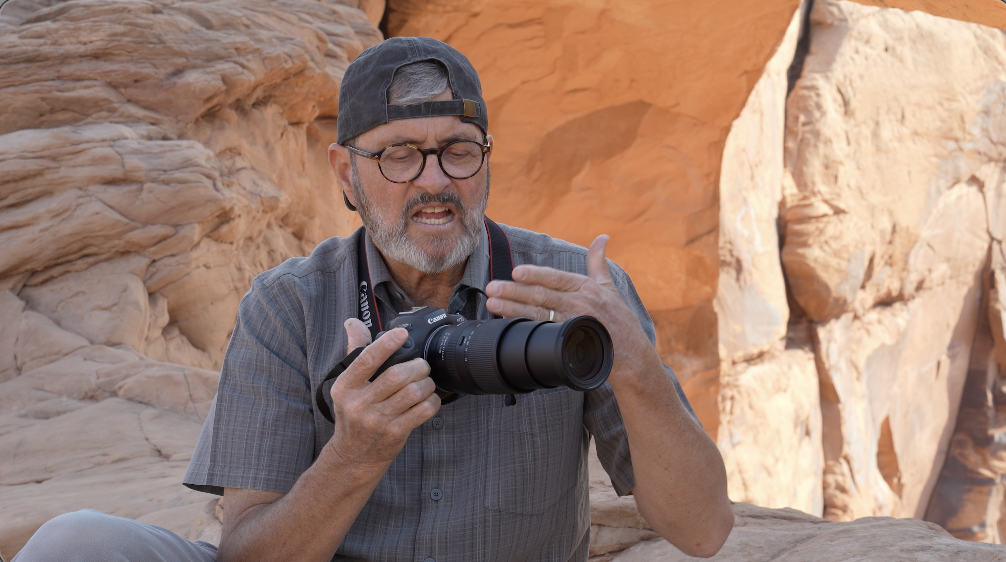
So, the lens is going to telescope out as you use it. So 18mm is completely collapsed. It’s going to go to 300mm. That makes it longer. That’s how they keep this into a small compact kind of size. So you do have that external zooming element there. So it’s nice and smooth and just really easy to use. So it’s just an excellent travel lens because you’ve got such a range. Everything from close-ups to telephoto. 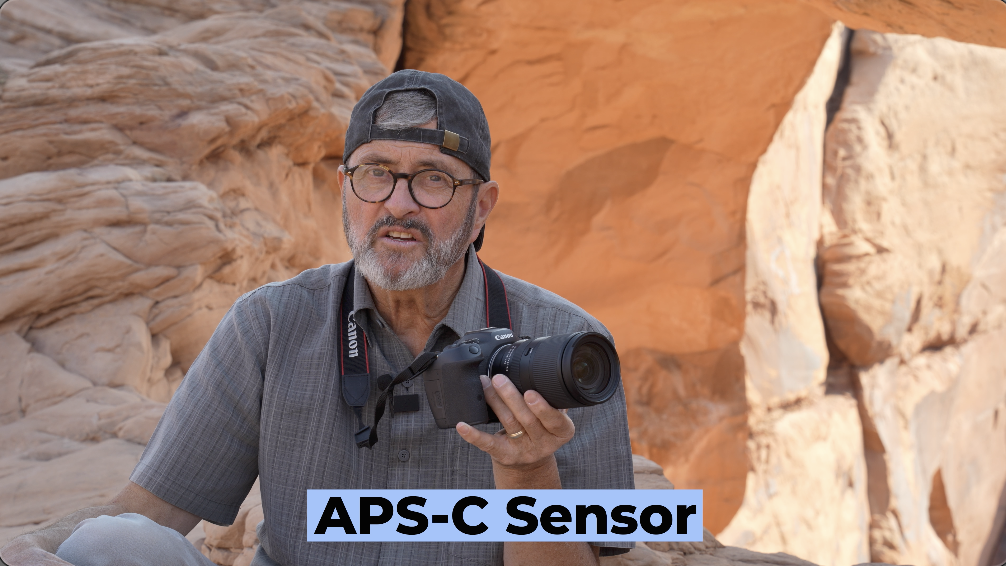 It’s an APS-C for APS-C sensors. So those are smaller, lighter weight cameras.

This is an R7 from Canon. And so it just matches that ecosystem, that really lightweight, compact ecosystem. But still gives you beautiful images and you’re not just shooting on something like your phone, which is fine.  But if you really want serious images, you need to step up to something like this. And at $600, it really makes for a great solution to be able to get you out and get you shooting.

Now f/3.5-6.3, you know, you’re going to get some beautiful bokeh even at that long lens. And so we’re going to test some of those things. Want to look at the bokeh and we also want to look at hand holding this.

So the close focusing distance is a real strong point for this type of an all-in-one zoom because at 18mm I can get 5.9 inches away from my subject matter. 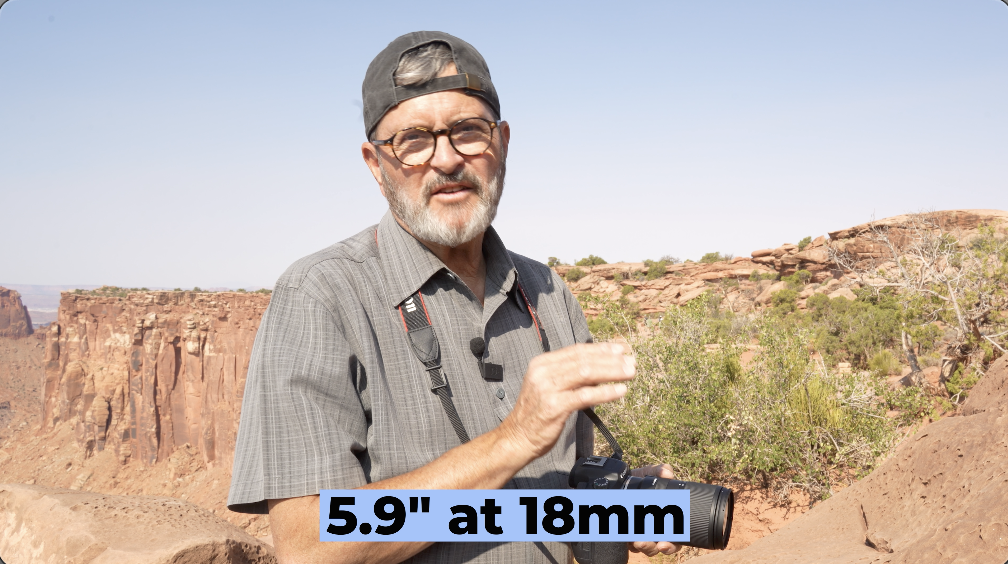 So I’m basically touching the front of the lens element on the surface I’m going to photograph. It gives me a 1 to two enlargement.
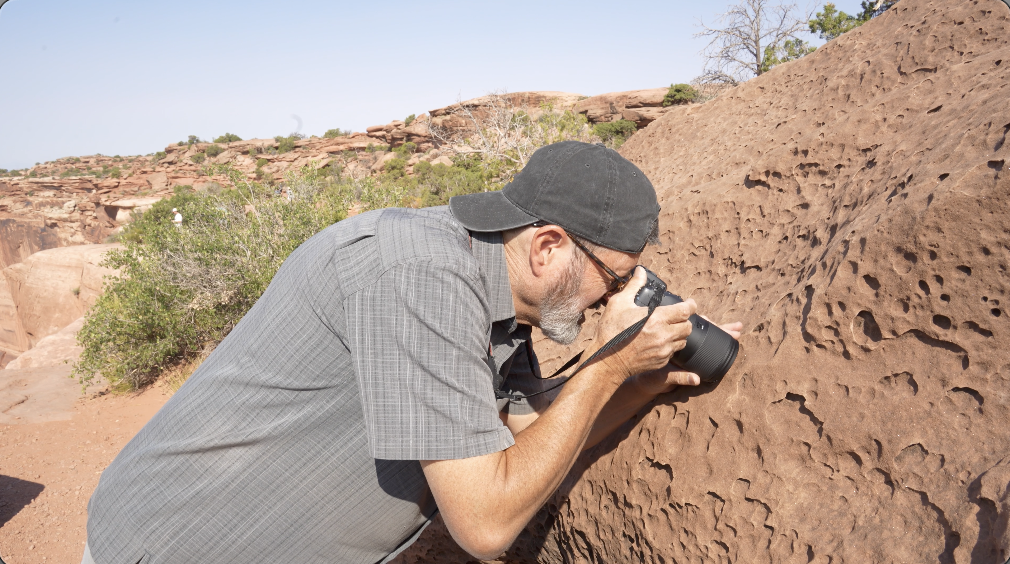
 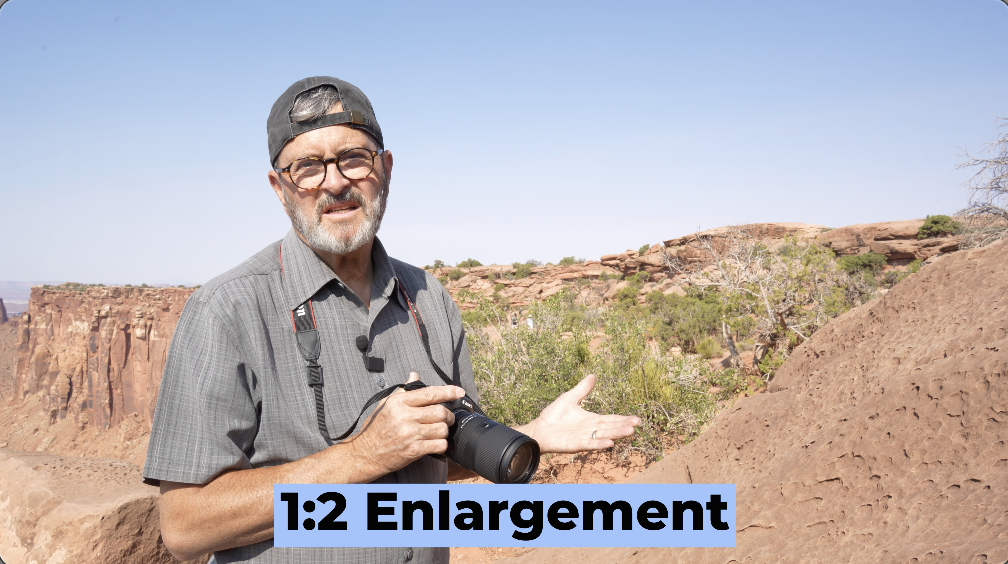 So I’m getting in super close. It allows me to get in right in here and I can take a picture of that little hole.
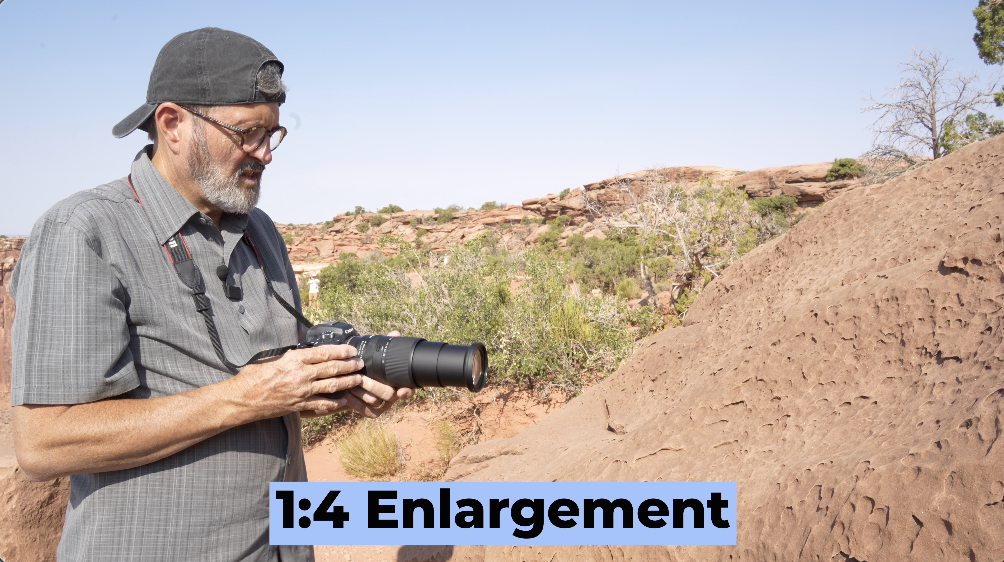
  But now when I go to 300 millimeters, I’m back at about 39 inches. At 39 inches I’m getting a 1:4 ratio.
 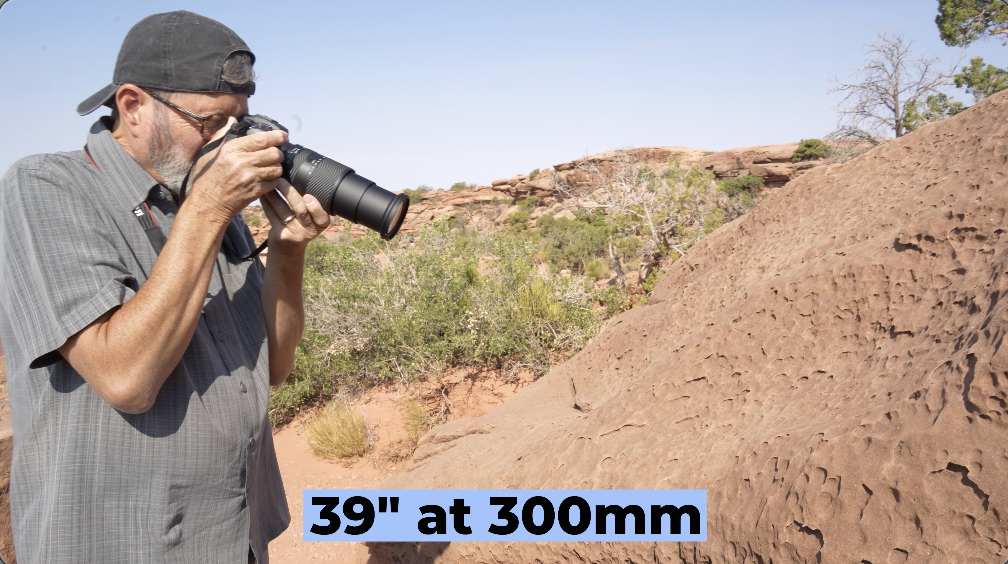 So on that wide end, you have really great macro capabilities. You can get in tight on things if you’re shooting.
  If you want to shoot flowers, you want to shoot some insects. I mean, I can get in close enough to get some shots, decent shots of insects with this.
 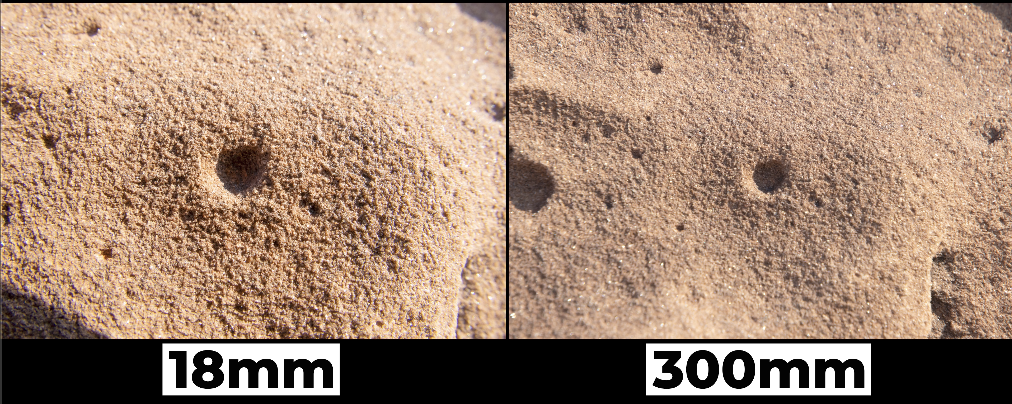 It starts to give you a macro capability as you get in close. Certainly great for just normal kinds of things.
  If you want to get in close to get a shot of something, you know, if you’re not trying to enlarge a bug’s eye, you know, you’re not going to get that.
  But you can get in close and get a great shot because it allows you to focus so close to the subject matter.

So, the lens comes with vibration compensation, VC. So, it’s got stabilization in the lens that makes it easier for you to be able to handhold this at 300 millimeters. 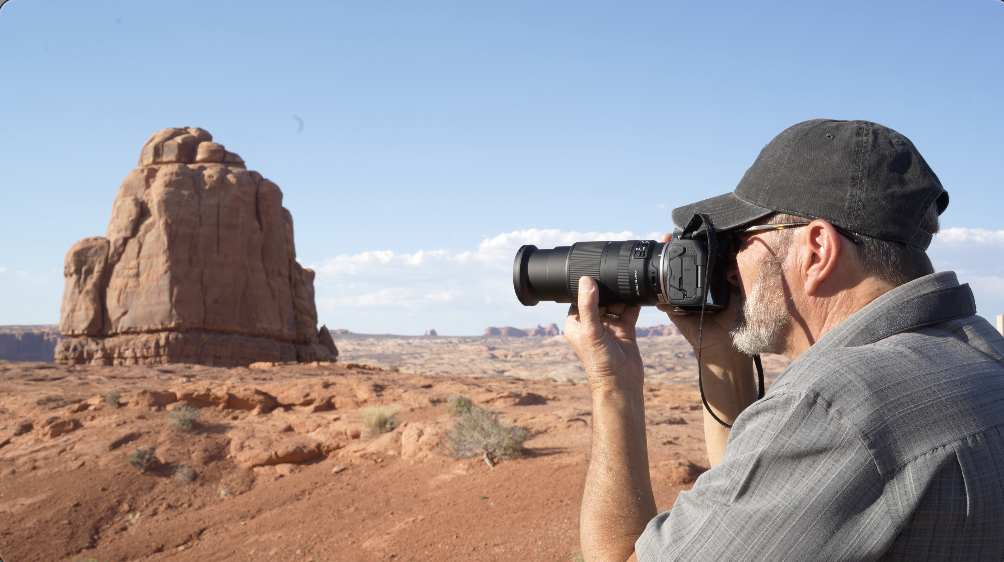 I’m going to play with that. I’m going to start at 1/250th of a second. I’m going to slowly let my shutter go a little slower and slower and just see how far down I can go and still handhold this at 300 millimeters.
  Yeah, we’ll just see where that’s at. When it comes to video, that vibration compensation kicks in at 70mm and under.
  And so you’re not going to get it on the higher end, but you’re going to get that stabilization at 70mm and under. So 70mm to 18mm. It’s an incredible lens at this price that’s going to give you that VC control. So the vibration compensation on this lens worked really well. I started out shooting this at 300 millimeters which is 450mm equivalent.
 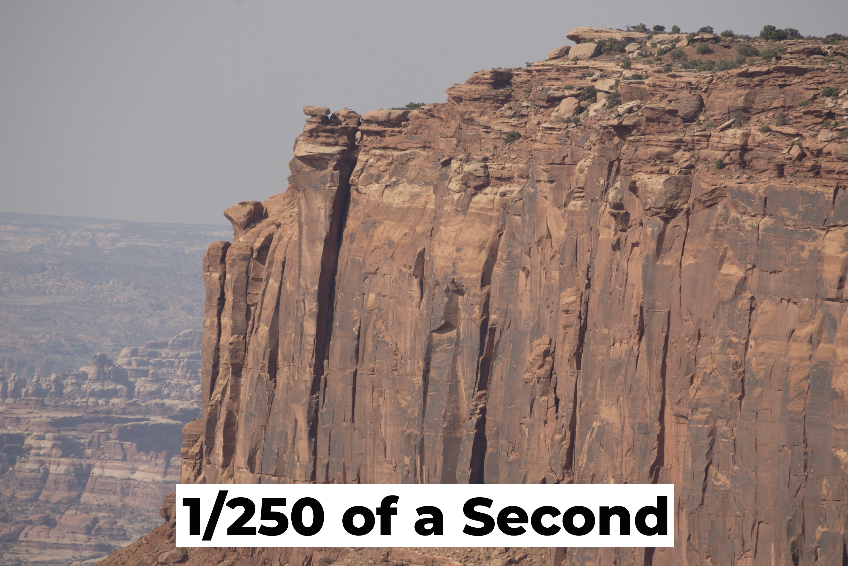 And I shot at 1/250th of a second. Here’s two or three of those, sharp, no problem.
  I went to 1/200th. Those are sharp, no problem. Here they are.
 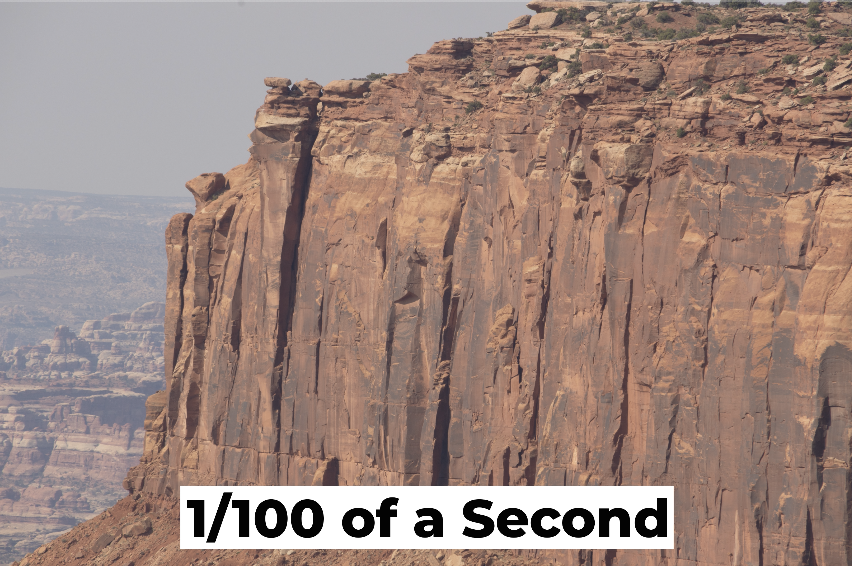 I went to 1/100th. These are sharp. You see them?
 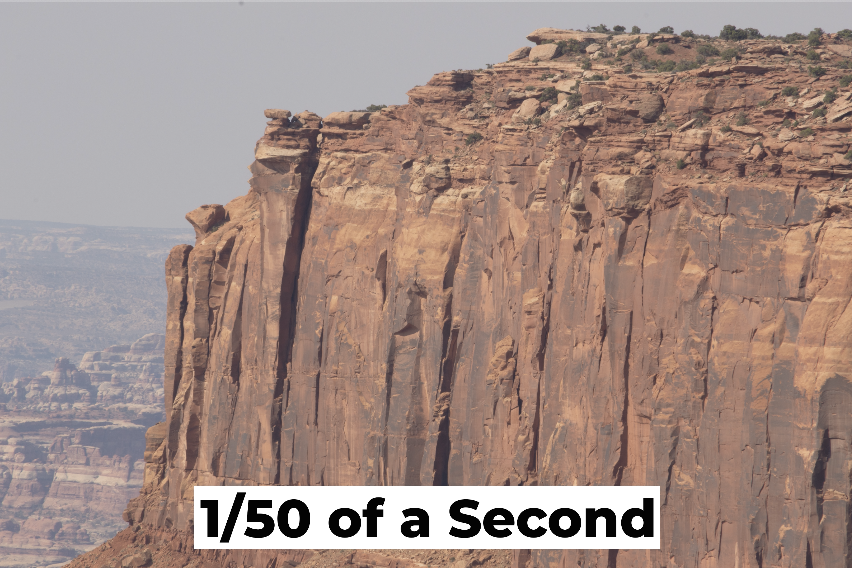 Went to 1/50th of a second. Those are very sharp.
  Went to 1/25th of a second. Those are sharp. I don’t see any problem with those. Maybe there’s one that starts to kind of blur just a teeny, teeny bit.
 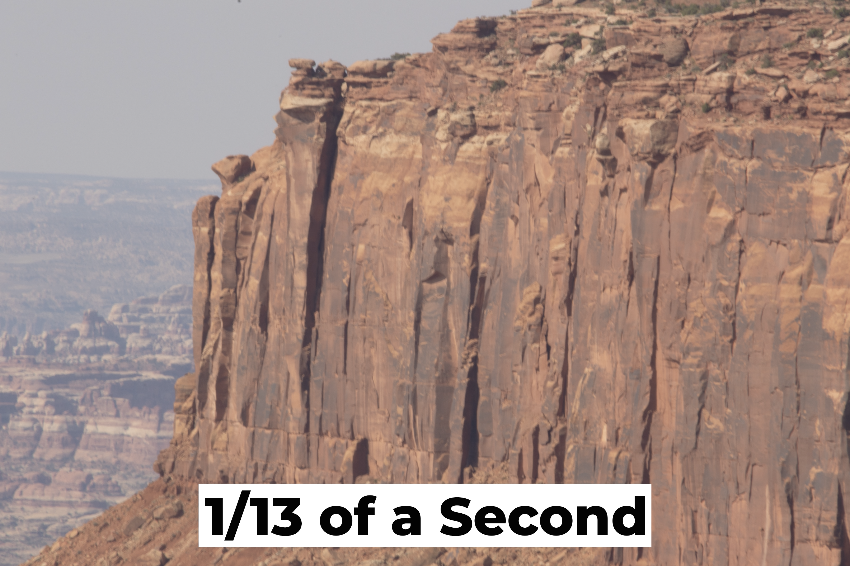 But when I went to 1/13th, those start to show a blur, handheld blur. So if you want sharp images, keep that vibration compensation on. Even if you’re shooting that 300 millimeter end of this lens, it’s going to stabilize the images and it really does its job. This camera and lens working together did a great job of stabilizing the images. I feel confident holding this at 300 millimeters, especially if I’m at 100mm and above 200mm, just no problem whatsoever.

So, this is a great application for shooting at night. Sometimes even when you push your ISO, you’re having to drag your shutter a little bit and this gives you the option to do that to be able to handhold things and get sharp, sharp images. On video mode with this, the vibration compensation works from 18-70mm. But it doesn’t work from 70mm and above. But 18-70mm gives you that smooth compensation. So, the lens is going to work with any kind of compensation that’s in the camera. Those two together should give you a beautiful sharp image.

So the 18-300mm has the same VXD autofocus that Tamron’s put in all of their professional lenses. So it’s really top of the line, best in its class for especially, for a zoom like this, an all-in-one zoom. It pops in really fast. If I’m working in 300mm, I can pop in at the far and as I go onto the grass and forward here, it just pops right into the focus in the foreground. So that it really is going fast. It’s quiet. It’s smooth. It’s really quiet and smooth enough you can use it for video without any problem. And it responds so fast. It’s just it’s pretty impressive how quickly it responds really. The VXD autofocus is superb. It’s a major feature with all Tamron lenses that makes them stand out, especially with a lens like this that it’s got to pull so far. So, it does it really fast and very smooth. So, it makes this lens really high-end.

So, the optical construction of this lens is made so its sharp in the middle and that sharpness is going to give you sharpness from the middle all the way into each one of the corners. The BBAR coating is going to cut down on ghosting. It’s going to cut down on chromatic aberration.  It really has the internal elements to give you sharp images. It also has in camera correction. So when you put all that together, you get really sharp performance from, you know, wide to telephoto. It gives you that whole range. I’m seeing that when I’m shooting, I’m not getting vignetting in the corners.
  The chromatic aberration is very clean. I mean it just gives me a great optical performance. You know this is a 300mm, an 18-300mm, basically a 27-450 mm lens. So optically it’s performing extremely well. Let’s look at some of the images.

So, this 18-300mm from Tamron is completely compatible with all the advanced features you get on a mirrorless camera. I mean, that’s why it’s made compact. Not just compact and light and it gives you a mirrorless kind of form factor, but it also integrates with all the different features you’re going to get in a mirrorless camera. You got eye focus. You’re going to be able to do tracking. I mean, it just gives you all of those features that work with whatever camera platform you happen to be shooting on.  So, it’s compatible with the features you’re going to get on Sony cameras, Nikon cameras, Fujifilm cameras, and now RF with Canon. I’m shooting on the R7. I’m getting all those autofocus features, and they’re working really well. It’s tracking the eye of a person as they’re walking towards me. It just stays right with them. And that with that fast autofocus really gives you the features that these mirrorless cameras have to offer, which is really awesome.

So, the bokeh is beautiful with this lens. I’m just shooting the sunlight highlights on this little plant here. And you just see the kind of, just the beautiful bokeh that we’re getting. I’m at f/13, too. If I go to wide open to f/5.6, it’s just really pretty. 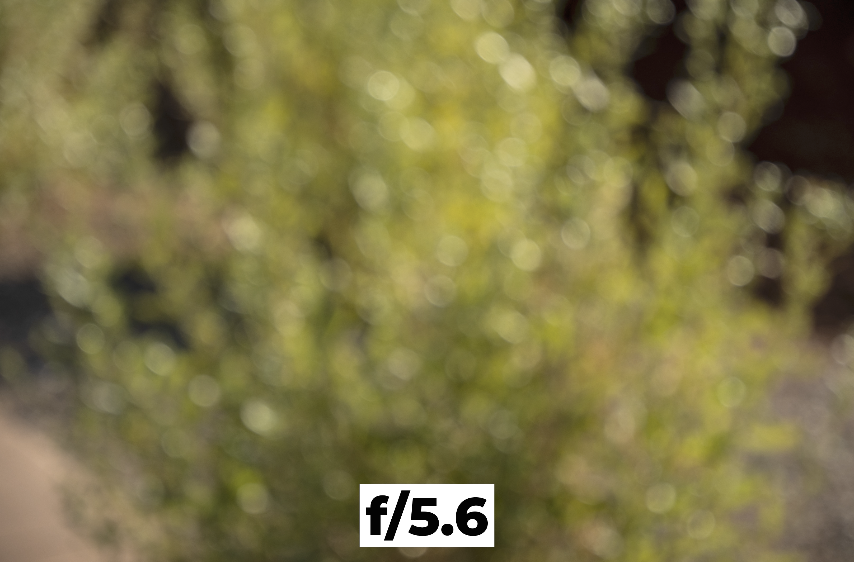 And I’m manually focusing so it just falls out of focus. If I get more and more sharp, bokeh becomes sharper. But the bokeh is beautiful. It’s nice and round. You don’t see a lot of that soap bubble kind of action in it. That’s at 300mm. Oh, that’s at 100mm. Looks awesome.

So, let’s wrap this up. I think the 18-300mm, which is a 27-450mm RF for Canon from Tamron, is a great offering. They’re starting to get RF lenses coming out now, which is very exciting to see for APS-C sensors. I think we’ll hopefully see some RF for full-frame coming real soon.  But this is a great offering for probably two reasons. One is price point. It’s under $600. So, you get an all-in-one zoom that’s going to give you really great close-up capabilities. It’s going to give you telephoto capabilities and it’s going to give you wide angle capabilities in a single lens. It’s an f/3.5-6.3. So it’s not super-fast, but the price point is such that it really makes it pretty hard to overlook the price and the compact lightweight design that works with a mirrorless camera.
  The other thing is just really, it’s just that reach. It’s that ability to go everything from telephoto to wide angle. It becomes an all-in-one zoom. It’s perfect for a person who wants to shoot soccer images. They want to take images of landscapes, you know, they want to shoot some animals. It’s a walkaround, great lens. This is a lens I would take to Yellowstone National Park where there’s so many animals and vistas and people. I mean, it would just be a great lens in a situation like that.
  It’s been a great lens here in all this Utah area with all the national parks down here. It’s a single choice lens. It makes it so you don’t have to carry a whole lot of other lenses with you. So there’s a look at the 18-300mm that’s available now in RF for Canon but also in Fuji, Nikon and Sony. So you keep those cameras rollin’ and keep on clickin’!